

A Garden In the Void
Derek Jarman, Driveways, and Defiant Gardens
Letter Fourteen
February 27, 2025
Dear reader,
It started in my driveway, of all places, in a spot that was never meant to be a garden. But there I was, surrounded by concrete, placing raised beds above the gravel. At the time, I was a year into running my flower truck. The goal: grow a small cut garden to supplement its supply, despite having no yard of my own.
The idea was almost laughable. I didn’t even have access to a garden hose. But I was still under the lingering spell of growing zinnias from seed. Just the year before, they had erupted from pots on my tiny balcony, framing the view of my oversized driveway below. There, I dreamed of conjuring an unlikely oasis—a tangle of cosmos among upright dahlias, billowing lemon basil left to flower, chocolate Queen Anne’s Lace swaying in the breeze. A garden in the void.
I went to work building beds from discarded pallets and cedar, bargained for water from neighboring units, scavenged secondhand pots, and ordered a load of compost. It was June, midsummer, and without a tree in sight, the driveway sat overexposed, gravel broiling in the sun.
I scattered Cosmos bipinnatus seeds into a bed, tucking in Celosia argentea and Gomphrena globosa alongside them. Another bed I filled entirely with dahlia tubers—their names waxing poetic: Café au Lait, Crème de Cognac. By June’s end, all that was left to do was water and wait.
As the garden grew, so did my connection to it. The raised beds lifted from the gravel, allowing more airflow against the smoldering heat. Soon, flowers towered above me, creating shady pockets between the beds. After watering, I would sit there, looking up at the cosmos—waving indolently in the wind, drifting among archipelagos of color.
Among the cool gravel, I could hear the flutter of ruby-throated hummingbirds slicing through the air, stopping suddenly to collect nectar from the zinnias along with the frenetic clamor of bees weaving through the celosia, their pockets full of pollen. The garden was alive, reverberating with biophonic sound, defying the emptiness of the grey gravel below it.
That year, I learned how to garden—stubbornly, freely, without boundaries, and in constant collaboration with my surroundings.
Somewhere in the process of building this small, defiant garden, I found myself drawn to the words in Derek Jarman’s Journal: Modern Nature. His words seemed to meet me where I was, building a garden from the gravel, creating something alive in a place that seemed unlikely.
His own garden at Prospect Cottage, born from the harsh, barren landscape of Dungeness, echoed a similar spirit.
Situated on the edge of an ever-humming nuclear power station, with the sea stretching beyond, it was a place where the land seemed impossibly barren. Prospect Cottage was an abandoned fisherman’s cottage painted black with tar. In the last years of his life, Jarman tended to a small, domestic garden that surrounded the cottage with no borders, no fences, no neatly defined boundaries, and no soil—just sand and shingle, scattered with mirage-like pools of light.
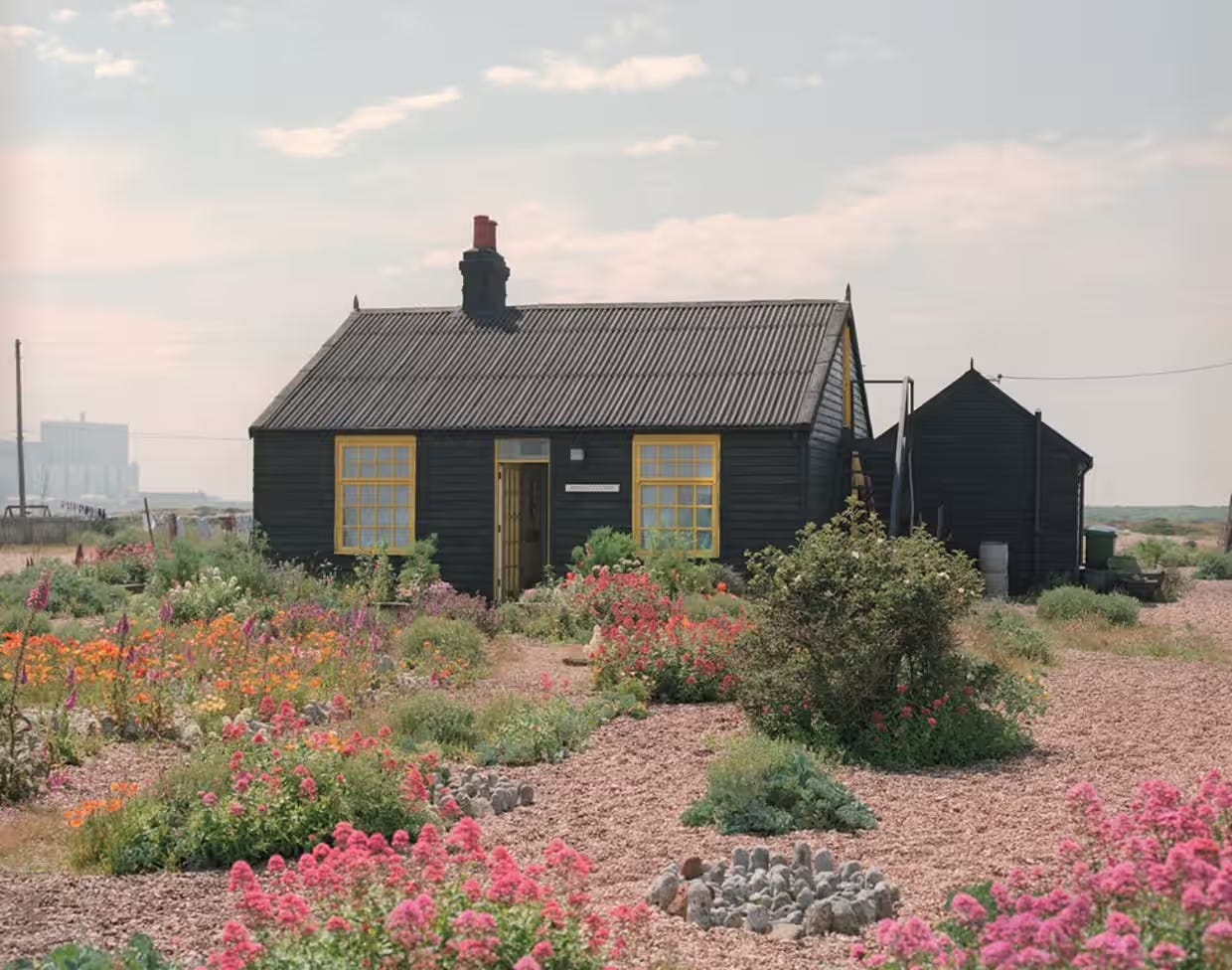
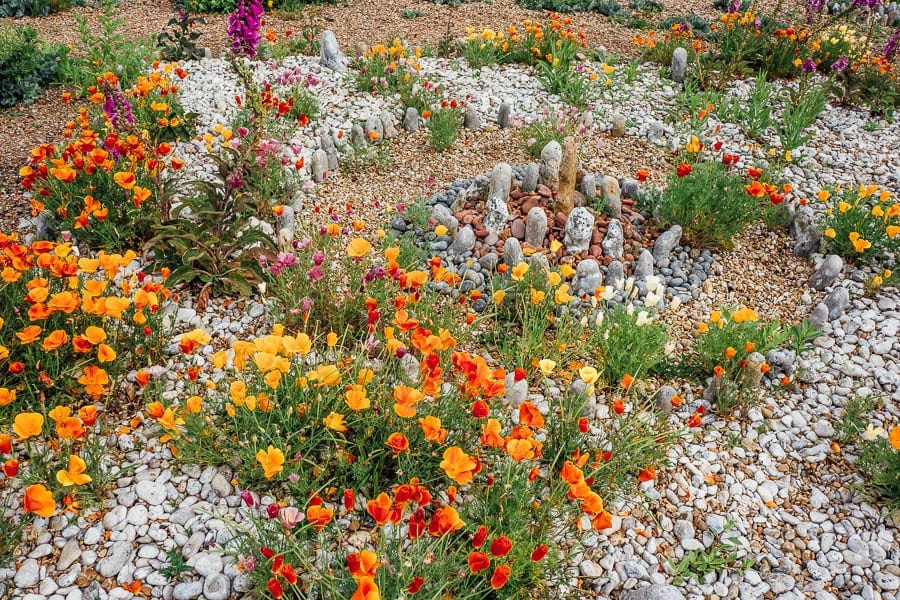
Jarman had no thought of starting a garden when he first moved to Prospect Cottage. It looked impossible. The garden started accidentally, with a single dog rose, staked by a curious piece of driftwood. From there, he planted California and opium poppies, iris, sea kale, borage, foxgloves, santolina, gorse. These plants were left to chance with the winds of the Dungeness, easterlies which brought in a salt spray that burned everything. The environment produced strong sunlight and low rainfall.
For Jarman, it wasn’t about forcing the land to conform. So often the purpose of a garden is to control and subdue. Instead, he gardened with nature, embracing its unpredictability and the forces that drive it forward. Despite the barren landscape, plants thrived unexpectedly.
That felt familiar to me. In Jarman’s garden, I saw what I was trying to create in my own patch of concrete.
Perhaps the most important thing the driveway garden taught me is that you don’t have to wait for the “right” time or the perfect space. You don’t need to own land or have an expansive backyard to begin. You can start wherever you are—a driveway, a balcony, a windowsill. These are all gardens. Real, living, breathing spaces that can transform with a little effort, care, attention.
One of my favorite aphorisms that Olivia Laing mentions in A Garden Against Time comes from a list of rules to live by, jotted down in their little black notebook:
“It’s always worthwhile to start a garden, no matter how temporary your stay.”
That’s exactly how I’ve felt in each space I’ve worked, whether it was a gravel driveway or a shared plot. Gardening has shown me that it’s not about permanence; it’s about the presence and the sometimes unyielding process. Even a temporary garden can leave a lasting impact.
If you’ve been thinking about starting a garden but feel like your space isn’t “enough,” I encourage you to go for it anyway. Start small. Start with what you have. Like Jarman with his single dog rose, begin with one plant, one idea, one moment of connection to the landscape you have. And watch what happens.

This has been the free edition of my newsletter, Field Notes.
In my next letter I’ll be sharing how I went from my driveway garden to building Tiny Meadow, my full-fledged flower farm (Another unconventional growing space of mine, I’ll explain why).
For paid subscribers in March:
A Gardening Year: March: Seasonal gardening tips plus, a to-do list for mid-March to mid-April —Spring(!!)
Subscriber Chat: I’ll be starting the first subscriber chat thread, share your first seedlings! Post gardening questions, etc.
For Founding Members: The first batch of Garden Post letters will go out at the start of March. The first of four snail mail letters for founding members this year, sent around each equinox. I’ve found the process of curating these special letters deeply satisfying, and would like to write more! The next two founding members will get the yearly subscription rate and receive all four letters this year including next weeks’.
Spring is slowly approaching, Can you feel it?
Love,
Rowen


A zine: Fugitive Gardens
A book: Modern Nature: The Journals of Derek Jarman
A film: Being There, Hal Ashby
A poem: Winter Garden, Emma Ruth Rundle
A practice:
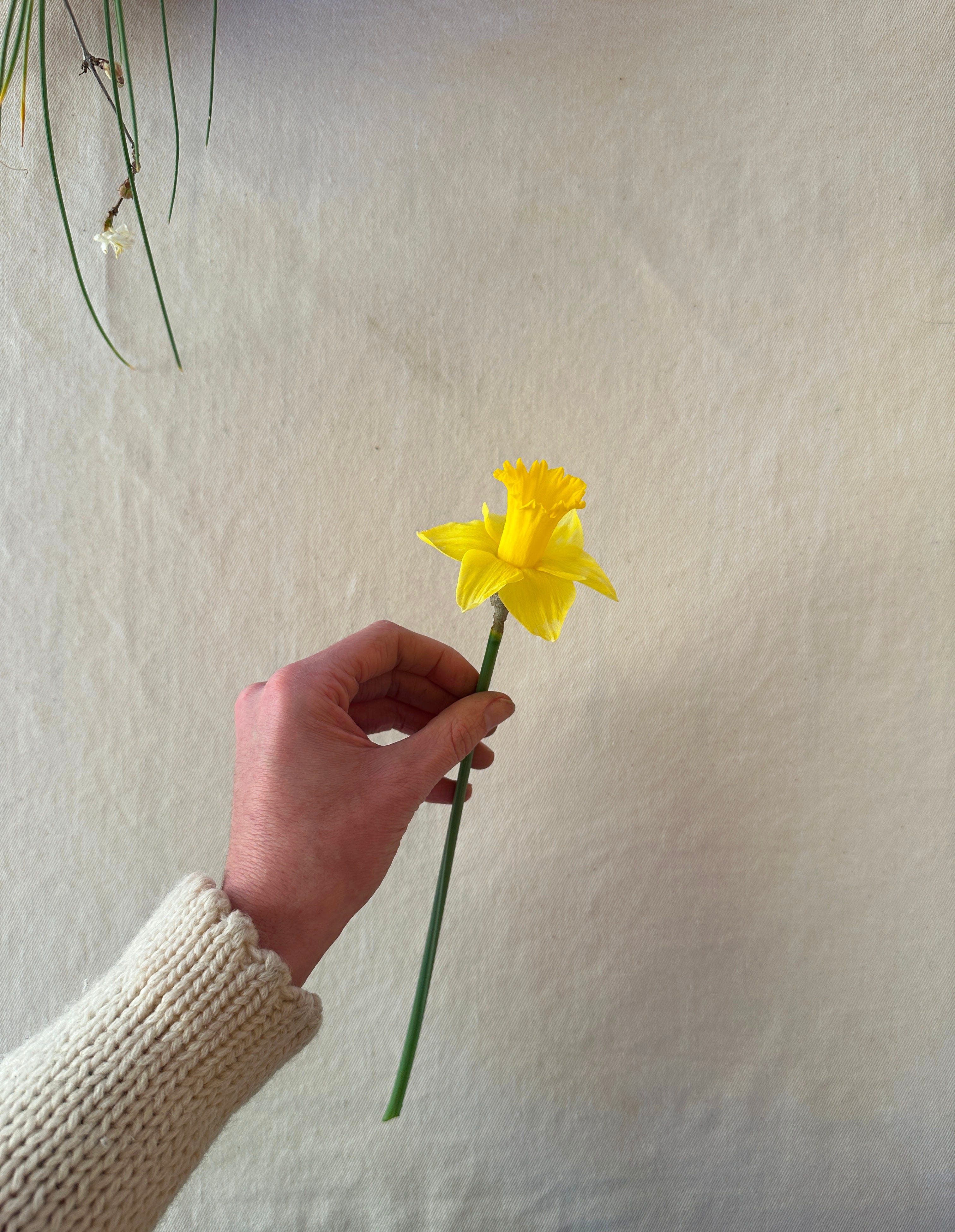
Notice the first signs of life stirring:
This was a delight. I was sitting in my mangled California native plant garden as I read it, with zinnias sprouting up in my garage, but it’s all felt so haphazard this year. Thanks for reminding me that I can grow something beautiful in an expanse of rocks, with a little dirt and some spunk. The little list, was masterfully curated. This was the perfect place to engage my mind during my morning coffee in the backyard “garden.” Thank you for taking the time to share from your talents and life lessons.
Dungeness is one of my favourite landscapes - wild and desolate - with truly resilient plants establishing a foothold in the substrate, all against the backdrop of a nuclear power station. You can learn so much from the garden at Prospect Cottage but even more from the plants toughing it out in the shingle