

Returning to the Garden
An invitation

Dear Reader,
The spirit ducks are already out on the water when I arrive, soft black-and-white bodies lifted against the dark lake. I watch them drift, then turn, briefly, toward the fog as it slides in from the far shore. When I look back, the lake is empty.
I close my umbrella so I can hear. The rain falls into the lake and becomes lake. It creates a soft static — a fine, bright fizzle pricks at my ears. If I stand very still, it begins to register inside me, like atoms vibrating, as though something dormant is being stirred. It wakes me. It draws me back into the physical fact of having a body. The sound of a thousand tiny collisions.
After the pressure and brightness of the holidays, January arrives with the same contained fizz. Water has been thrown on the fire. The calendar is clear. The air is thin. What remains feels elemental. It is not a beginning in the sense of spectacle, but a return to interiority, quiet, a homecoming.
I write to you now at my desk, birch branches gathered from the lake propped in a glass jug, their catkins dangling above me. Seed catalogs are spread all around, dog-eared, notes in the margins. Outside, the garden is dormant. Inside, something is beginning.
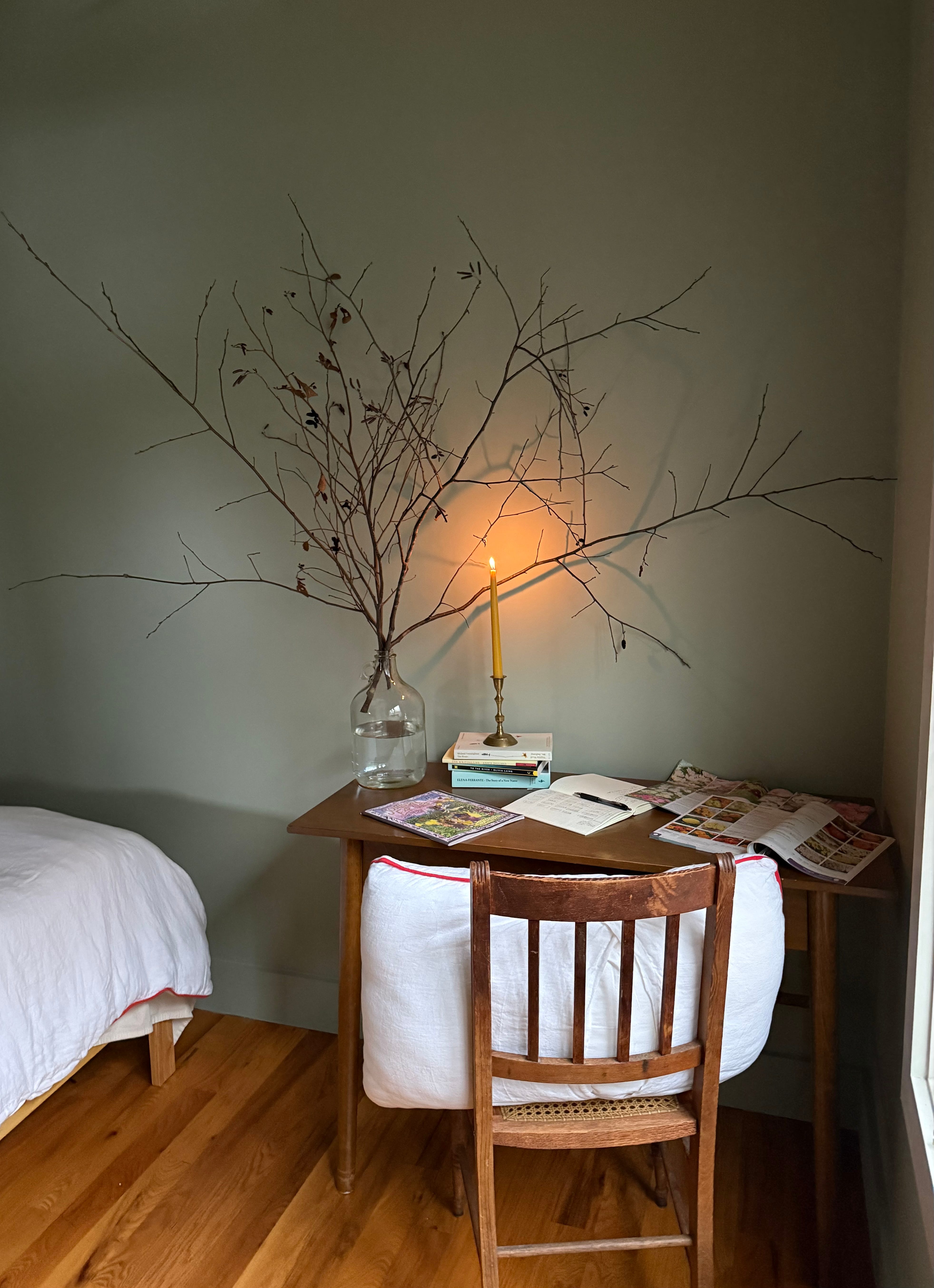
Even here, I can feel it again, the sense of atoms buzzing, as though the body remembers something. It feels as though I am returning to the garden, and in doing so, returning to myself.
Looking Back
I keep returning to a line I shared when I first started sending these letters to explain what led me to the garden:
“I wanted to move into a different understanding of time: the kind of time that moved in spirals or cycles, pulsing between rot and fertility, light and darkness.
I had an inkling that even then, the gardener is initiated into a different understanding of time, which might have a bearing on how to preclude the apocalypse we seem bent on careening toward.
- An excerpt from Olivia Laing’s The Garden Against Time
Since then, I’ve written twenty-six letters. They did not always stay in the garden in a literal sense, but they have all moved within that different understanding of time I was longing for.
Some of the earliest were about loneliness, written in the low light of winter. Others followed Emily Dickinson rabbit holes: her seventy-seven–page herbarium, archiving the Anthropocene.

I wrote about Derek Jarman’s cottage and a driveway garden, about making beauty in seemingly impossible places.

The writing wandered. It moved through the endless stairs of early spring and scrappy high summer. It walked through ruins, finding old foundations under grass, a limelight summer in which I felt suspended in time, unable to write or garden. It passed through Las Vegas conference rooms without birdsong and came back home to deer and woodsmoke. It began again with nature journaling, discovering that attention itself can be a practice, my most read letter to date:

During that time, this space kept growing, slowly, improbably, until there were more than 3,000 of us here. Gardeners, foragers, artists, people who love the living world and are trying, in their own ways, to remain in conversation with it. Field Notes is exactly that: a conversation with the natural world, through the garden, through a field journal, through attention.
Part of the buzzing I feel now comes from what I haven’t written yet, the edges I haven’t reached, the questions I’m only beginning to ask. I’m looking forward to exploring them here, slowly, in this spiral. And I’m so glad you’re here.
Returning to the Garden
And now, January.
Seed catalogs on the table. Cold soil and early light. I am ready to return to the work. The work is a way of being in relationship with a place and its seasons.
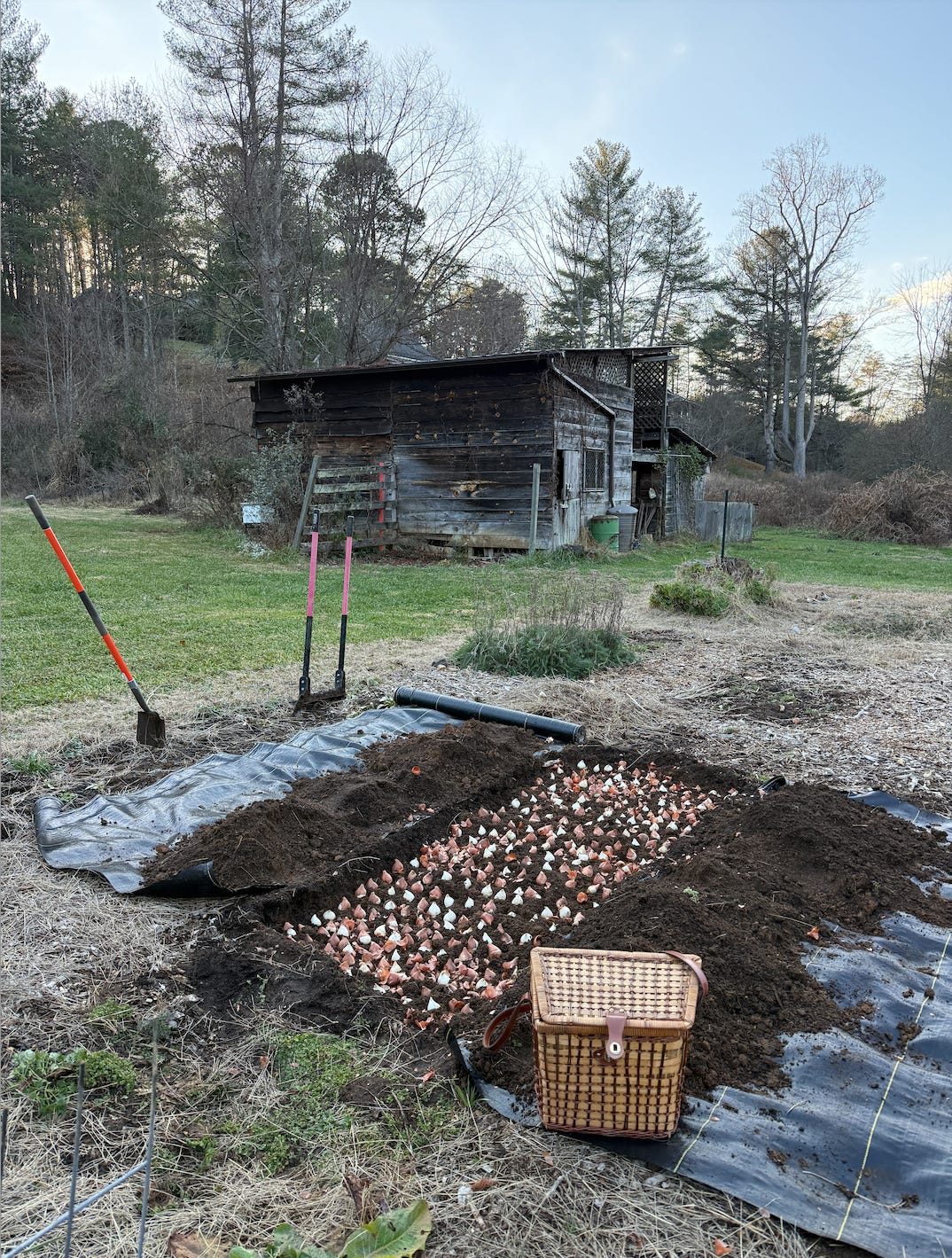
If you have wandered too, you are welcome here. If your garden, literal or metaphorical, got away from you last year, you’re in good company. We can begin again together, in the middle of winter.
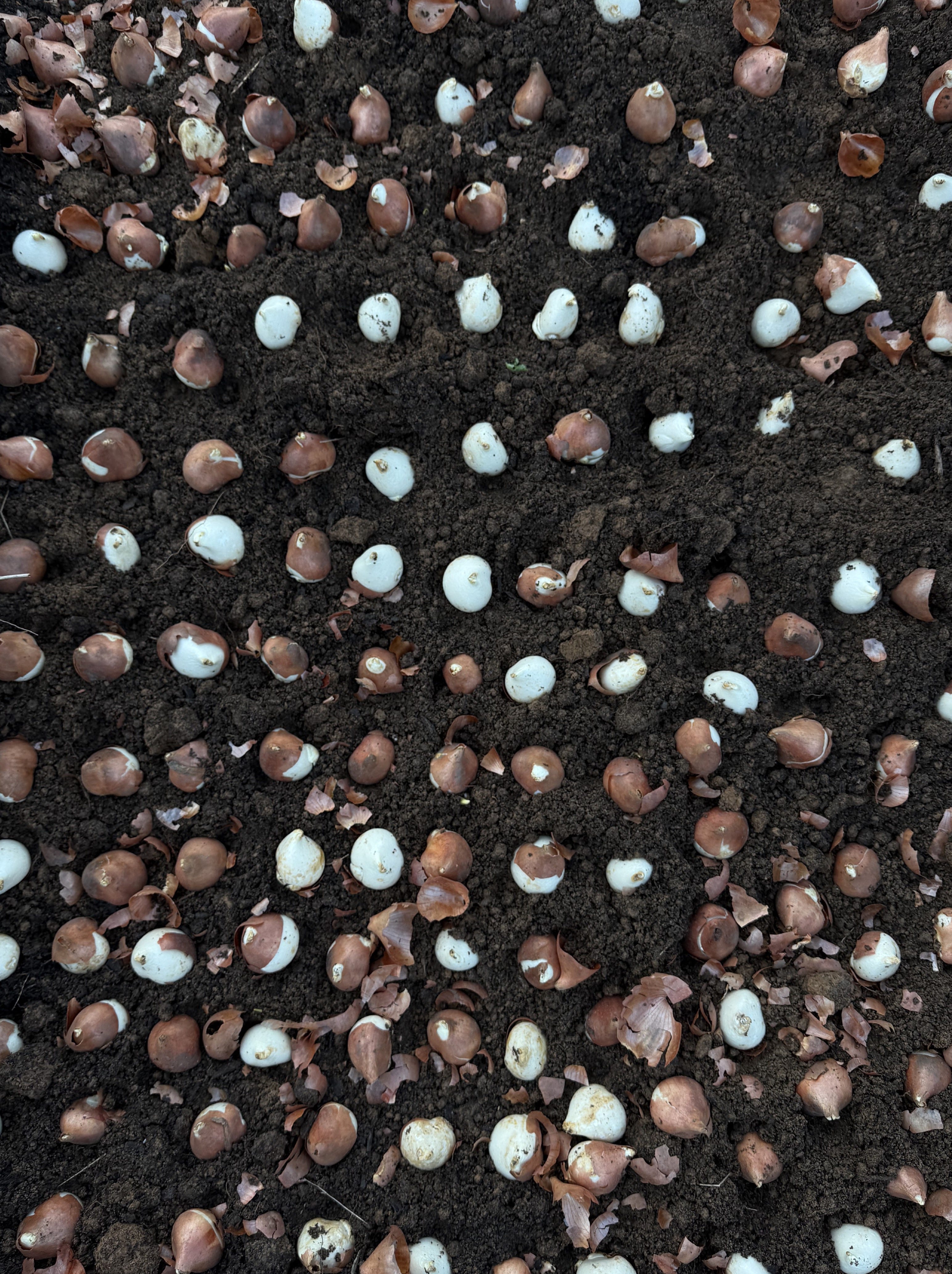
The garden waits. It shifts, goes to seed, collapses, and rises again.
This January, I’m extending a simple invitation:
Come back to the garden with me.
Not perfectly or every day. Just as you are, noticing the small threads in field margins of winter, trusting that the geometry beneath the overgrowth is still there.
Love,
Rowen
P.S. What this space looks like in the year ahead
Free subscribers receive occasional letters: reflective, seasonal essays, garden-life parallels, what i’m noticing in the living world.
Paid subscribers A Gardening Year: Letters throughout the year with practical gardening advice through the growing season. View the full archive here. Paid subscribers also get full access to the occasional paid essays that move through topics such as nature journaling, curated lists, pilgrimages, films, grief, and joy, whatever rabbit hole I’m following.
Founding Members will continue to receive 4 handwritten snail mail letters each season: fall, winter, spring, and summer.
What I’m leaving behind:
The promise of a fixed schedule. These letters will follow the rhythm of the seasons. Some months will be fuller. Some will be quiet. There will be pauses, and returns. I want this space to move the way gardens do.
Whether you continue enjoying the free newsletter or decide to join the paid options, your support means everything! By choosing to go deeper with the paid membership, you’ll help me continue doing what I love and create more opportunities to nurture this community.


A book: A Winter Book Tove Jansson
A film: Sentimental Value, Joachim Trier
This time of the year I feel led to explore underworlds and otherworlds. What passageways lie underneath the garden? A good place to start is Nina MacLaughlin for the Paris Review, The Shadows below the Shadows and for going deeper: Underland by Robert Macfarlane
A practice:
Repeat after me:
Even if it’s cold, I’ll go outside.
Even if it’s wet, I’ll go outside.
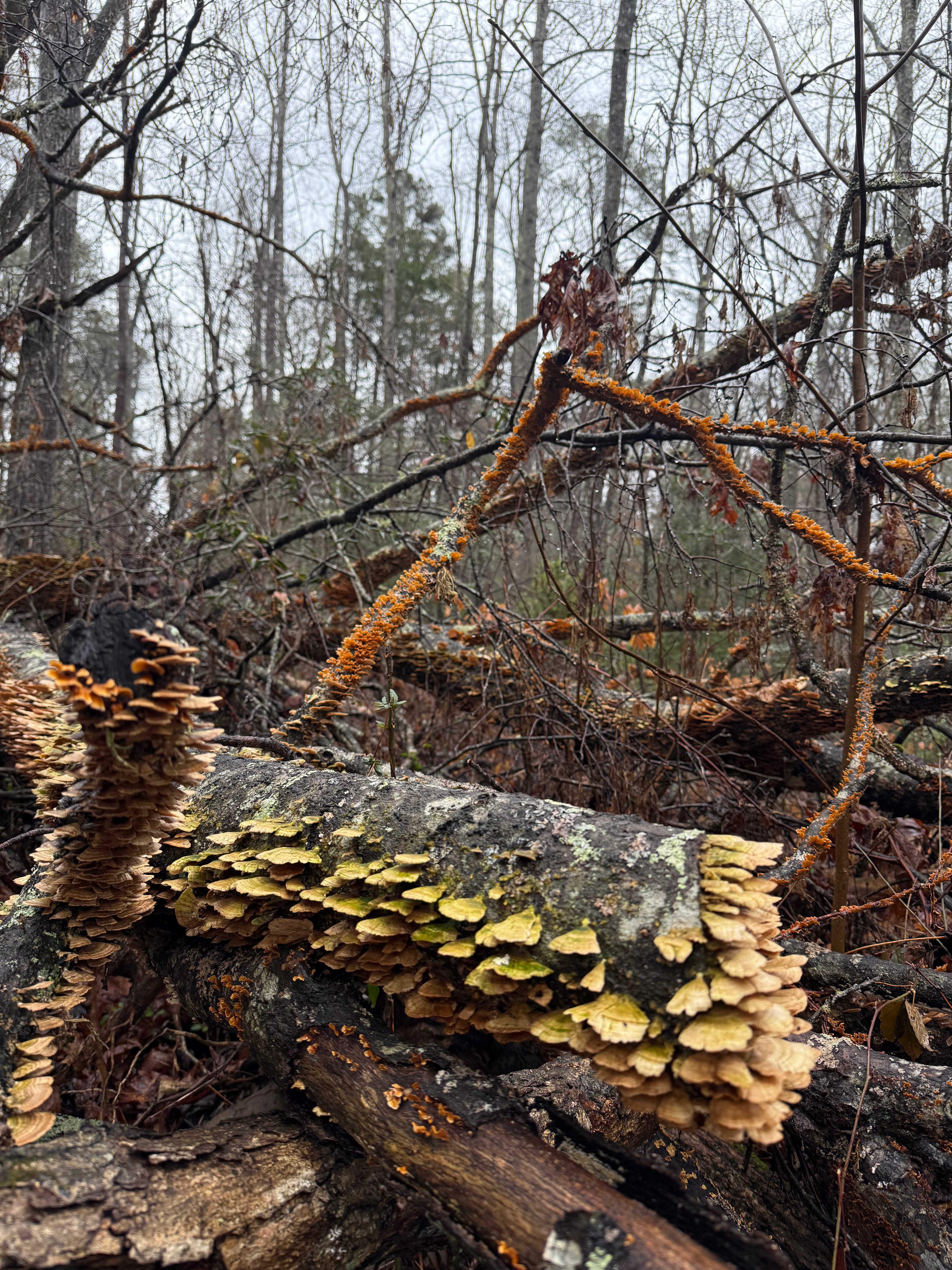
Thank you for your first letter in 2026. I've enjoyed it thoroughly and looking very forward to whats to come furthermore. 🤍🌱
Time to try to let things quiet down in the small corner I have some control over, knowing how few have that privilege. “the holidays” are just a bit much sometimes. And the news is just…. Enough of that. Maybe try winter sowing this year. Definitely not too late say the practitioners…any old potting soil you have around plus a takeout container and some leftover seeds from summer maybe. Also, the suppliers who said new offerings would be available in January are starting to show their new catalog. You can get a great new Lily from a grand old supplier for $6! I wonder how my new roses like this January rain. Not at all I suspect. Taking a break from helpless rage for today.